




Driver's License Restoration
Strategic DAAD hearing preparation that turns driving abstract analysis, substance abuse evaluations, and documented sobriety into a winning restoration case.
Driver's License Restoration
Michigan's Secretary of State revokes licenses after repeat OWI convictions and keeps them revoked indefinitely. Getting your license back requires winning a formal administrative hearing—not just waiting out a suspension period.
The Michigan Driver Assessment and Appeal Division (DAAD)—now administered through the Office of Administrative Hearings and Rules (OAH)—conducts license restoration hearings under strict evidentiary standards that most applicants don't understand and most attorneys don't prepare for. The hearing officer is looking for one thing: proof by clear and convincing evidence that your alcohol or drug problem is under control and is likely to remain under control. That standard requires documentation, testimony, and presentation that goes far beyond showing up sober.
Michigan imposes a mandatory revocation period of one year for a second OWI within seven years, and five years for a third lifetime offense. After those periods expire, restoration is not automatic—you must petition, build a record, and win a contested hearing. Many applicants are denied for procedural failures alone: incomplete substance abuse evaluations, unsupported sobriety claims, or driving abstracts that reveal patterns the applicant failed to address. A single denial resets the clock by one year.
Our license restoration practice is built around the hearing officer's standard, not the client's timeline. We analyze your driving abstract to identify every issue a hearing officer will raise, direct you to qualified evaluators who understand the DAAD documentation requirements, and prepare you for every question the hearing officer will ask. We do not file petitions we are not prepared to win.
The SOS Hearing Blueprint
The DAAD/OAH hearing is a formal administrative proceeding with its own rules of evidence, legal standard, and documented requirements. Walking in unprepared is the fastest path to a one-year denial.
Michigan's license restoration hearing is conducted before a hearing officer who reviews your petition, your substance abuse evaluation, your support letters, and your driving abstract against a demanding legal standard: clear and convincing evidence that your alcohol or substance use problem is under control and likely to remain under control. The burden is entirely on the petitioner. The hearing officer is not neutral—they are trained to look for inconsistencies, unsupported claims, and documentation deficiencies that justify denial.
What the hearing officer evaluates: The substance abuse evaluation is the cornerstone of every petition. It must be completed by a licensed evaluator using DAAD-approved forms, address your entire substance use history honestly, and support a diagnosis consistent with long-term sobriety. Evaluations that downplay prior use, omit relevant history, or are completed by evaluators unfamiliar with DAAD standards are denied at a rate that surprises most applicants.
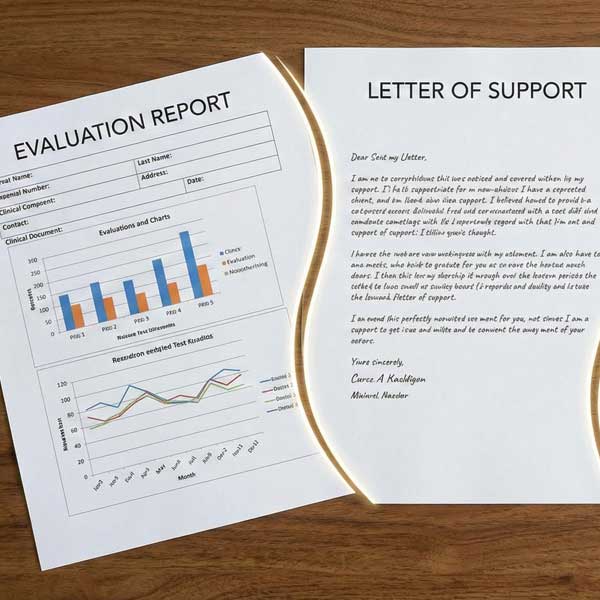
Support letters: Letters from individuals who can speak to your sobriety from personal observation—not character references—are required. Hearing officers discount generic letters and family testimonials that do not address the specific question of whether alcohol or drug use has ceased. We guide clients on who should write letters and exactly what those letters must address to carry weight at the hearing.
Hearing preparation: We prepare every client for the specific questions DAAD hearing officers ask—because those questions are predictable, and the wrong answer to a routine question is the most common reason petitions are denied. Your last drink, your understanding of your substance use problem, your support system, your sobriety date, and your relapse prevention plan are all examined. We ensure you can address each of them accurately and completely before you walk into that hearing room.
Evidence Collection
A winning restoration petition is built on documentation—not intentions. The substance abuse evaluation, support letters, and sobriety evidence must align perfectly or the hearing officer will find the gap.
Michigan's DAAD documentation requirements are specific, technical, and unforgiving. The substance abuse evaluation alone requires completion on state-approved forms, a diagnosis that matches the petitioner's actual history, a recommended level of support, and an evaluator opinion regarding sobriety that is grounded in documented evidence rather than client self-report. Most denials trace back to evaluation deficiencies that could have been corrected before the hearing was ever scheduled.
Substance abuse evaluation: We direct clients to evaluators who understand DAAD's documentation requirements—not just clinical assessment generally. The evaluator must conduct a thorough interview, review your entire substance use and treatment history, and produce a written report that addresses every element of the DAAD checklist. An evaluation from a well-meaning but uninformed evaluator is a denial waiting to happen. We identify and correct deficiencies before submission.
AA/NA and support group documentation: If your sobriety has been supported by a 12-step program or other structured support, that attendance needs to be documented—sign-in sheets, sponsor letters, and a demonstrated pattern of regular participation over a meaningful period. Verbal claims of AA attendance without documentation are dismissed by hearing officers who have seen every attempt to fabricate a sobriety record.
Independent sobriety evidence: The strongest petitions include objective evidence of sobriety beyond self-report: interlock device records showing no violations, medical records documenting alcohol-free lab results, employer statements noting changed behavior, and support letters from non-family members who have observed sobriety consistently over time. We identify what evidence is available in your specific situation and build the petition around the strongest possible record.
Record Analysis
Your driving abstract tells the hearing officer a story. We read it the same way they do—and we address every entry that could become a denial before the hearing begins.
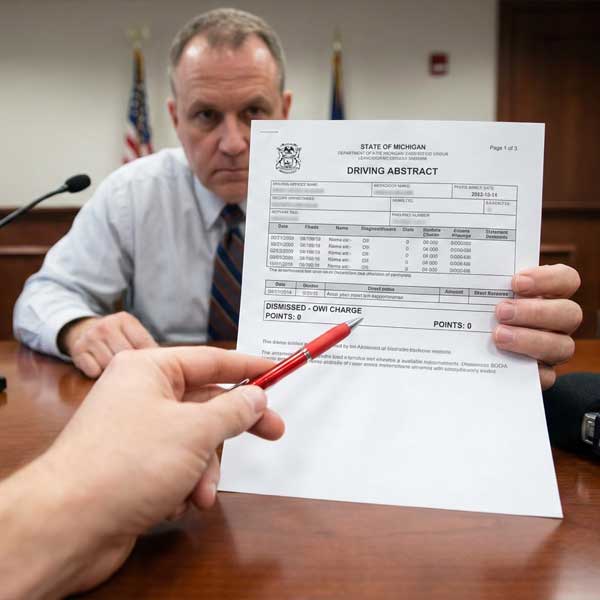
The Michigan driving abstract is the documentary foundation of every license restoration hearing. It records every conviction, every violation, every suspension, every revocation, and every prior restoration attempt. Hearing officers review it in detail looking for patterns—escalating offenses, post-revocation driving violations, prior denials, and any evidence that the petitioner's substance use problem is not actually under control. Most clients have not reviewed their own abstract carefully before their first consultation with us.
Abstract review and issue identification: We pull your full driving abstract at the outset of every restoration case and analyze it the way a hearing officer would. Prior OWI dates, conviction classifications, any driving while revoked entries, interlock violations, and prior DAAD hearing outcomes are all mapped before we assess your readiness to file. If the abstract contains entries that need to be addressed—or errors that need to be corrected with the Secretary of State—we identify them before they become surprises at the hearing.
Timing and eligibility strategy: The mandatory revocation periods are just the starting point. Eligibility depends on when the revocation was imposed, whether any subsequent violations occurred during the revocation period, and whether prior restoration petitions were denied within the last year. We calculate the earliest eligible filing date and assess whether the sobriety record is strong enough to win at that date or whether additional documented sobriety time would improve the odds.
Out-of-state convictions and clearances: Michigan's DAAD also handles clearance petitions for individuals who were revoked in Michigan but now reside in another state. Out-of-state OWI convictions and driving history must be reconciled with the Michigan abstract. We handle clearance petitions and coordinate with out-of-state licensing authorities where necessary to ensure the petition record is complete and consistent before the hearing.